Travel guide
Camel Trekking in Morocco: The Complete Guide
Where to go, what it costs, and what a night in the dunes is actually like — the full picture before you book.
What camel trekking in Morocco actually means
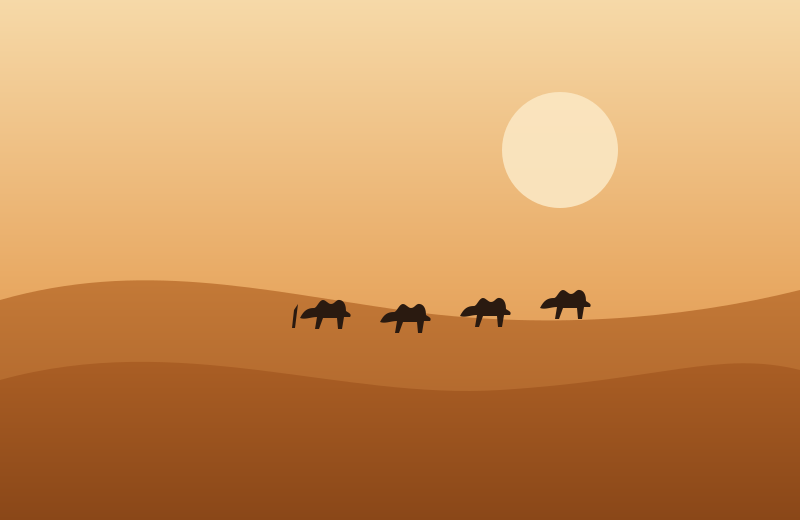
The phrase covers everything from a one-hour tourist loop to a week-long expedition, and the difference matters. At one end are short rides near Marrakech — pleasant, but not the Sahara. In the middle is the classic experience: a 1.5-hour ride into real dunes at sunset, a night in a desert camp, and the ride back after sunrise. At the far end are true multi-day treks, where you travel at camel pace for days and camp wild.
This guide focuses on the real desert versions — the ones that involve the Sahara, a camp and a night sky you will not forget. All of them are accessible to complete beginners: camels walk, cameleers lead them by hand, and no riding skill is required.
Where to go: Merzouga, Zagora or near Marrakech
Merzouga (Erg Chebbi) is the classic choice: the tallest dunes in Morocco — up to about 150 metres — rising straight behind the village, with camps set deep in the sand. It is a 9-hour drive from Marrakech or 7 from Fes, so most visitors come on a 3 or 4-day circuit, or base themselves in the village for a night or two.
Zagora is 3 hours closer to Marrakech, which makes it the standard 2-day option. The trade-off is honest and simple: the dunes are low and scattered. You go to Zagora for a desert night when time is short, not for the postcard dunes.
The Agafay "desert" near Marrakech is rocky rather than sandy — a stony moonscape 40 minutes from the city. Good for a dinner-and-sunset evening; not a Sahara experience.
Our verdict after years of running tours: if you can spare three days, go to Merzouga. If you have two, Zagora is a fair compromise. If you have an evening, Agafay exists — but do not confuse it with the Sahara.
What it costs in 2026
Real prices from the Merzouga market, per person: a 2-hour sunset camel ride costs €20–35; an overnight camel trek with a standard camp €35–60; the same with a luxury camp (ensuite bathroom, real beds) €80–120; a shared 3-day circuit from Marrakech €95–175; a private multi-day camel trek from around €50 per day.
Booking direct with a local operator is usually 20–30% cheaper than booking the identical product through the big platforms, because the platforms take that much in commission. The camp, the camels and the guides are often literally the same.
What a desert camp night is really like
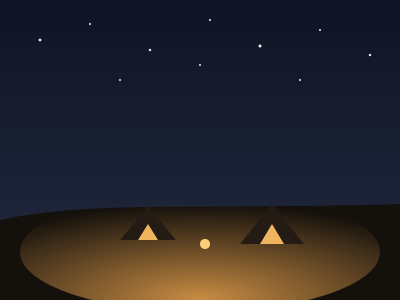
You ride out roughly 90 minutes before sunset, watch it from a high dune, and reach camp at dusk. Dinner is soup, tagine and fruit; afterwards your hosts play drums around the fire, and then the main event begins — a sky so dark the Milky Way casts shadows. Standard camps have proper mattresses, thick blankets and a shared toilet tent; luxury camps add real beds and private bathrooms.
Two honest warnings. First, desert nights are cold — near freezing from November to February — so pack layers even if the day was hot. Second, camels are not sofas: 90 minutes is comfortable for almost everyone, but three hours in a saddle will remind you of it. Walking beside the caravan is always allowed and often lovely.
How to choose a good operator
Ask three questions. Where exactly is the camp — deep in the dunes, or beside the road? How are the camels cared for — a good operator answers in detail and with some pride; a bad one changes the subject. And is the price complete — meals, bedding, the camel per person — or padded with extras later?
Prefer operators actually based in the desert town over resellers in Marrakech: shorter chains mean better prices, and the people who own the camels answer for their condition.
Frequently Asked Questions
Is camel trekking safe?
Yes, for all ages — the pace is a walk and every camel is led. The genuine risks in the desert are sun and dehydration, both managed with water, a scarf and sensible timing, which is what your guides are for.
Do I need any experience?
None. Mounting and dismounting are the only skills involved, and your cameleer manages both. The saddle has a metal handle to hold.
When is the best time to go?
September–May. October, November, March and April are the sweet spot: warm days, mild nights, few sandstorms. See our month-by-month guide for details.